



10 Science-backed ways to boost your brain health in 2026
It’s responsible for every single thing in your life – so give it the respect it deserves. Here’s how to make sure your brain health is at its most tip top, with a little help from the experts.
1. Hone your decision-making skills
Next time you’re obsessing over a decision, take a second, stop, and remember what your instinct told you in the first place. In areas where you have experience, your gut instinct is often drawing on years of pattern recognition – and chances are that no matter how long a decision takes, it may well land close to that first intuitive nudge.
Becoming a better decision-maker builds your confidence and sense of self, so it’s well worth investing in some good habits to make good choices. Here are our top tips:
-
Get creative and look for solutions that aren’t that obvious. Not all problems are black and white, and thinking that they are can mean you get stuck.
-
Give yourself a set amount of time. Small decisions get 10 minutes, big decisions get 20. You have an innate ability to problem solve, and setting a time limit can help prevent overthinking and build trust in your judgement.
-
If you allow time to run out on a situation which means a decision is made for you by default, you’re inherently undermining your own abilities and self-confidence.
2. Rest up
You need sleep. Nope, you’re not talking to yourself in the mirror again – you really do. Your brain especially.
Sleeping deeply is your brain’s chance to clean itself by activating the glymphatic system – a network that becomes more active during deep sleep and helps clear metabolic waste from the brain. Just like when you come home after the cleaner’s been; you’re not aware of it happening, but it feels so good to be all spick and span. And healthy, consistent sleep is associated with a lower risk of neurodegenerative diseases like Alzheimer’s (sleep, not a clean house).
To optimise your sleep – and help your brain in the process – here are some healthy sleep habits:
-
Wake up at the same time, at least five days a week. Yes, even if you’ve had late nights or toddlers. This helps keep your body and brain’s circadian rhythms in sync.
-
Gift yourself a lovely night-time routine. This should be a relaxed, tech-free hour, when you can wind down, clear your thoughts (maybe write them down), and signal your brain that it’s time to switch off for a while.
-
Build a luxurious cave. Think cool, dark, quiet, and free from outside distractions (like the TV).

3. Learn to control your stress response
How you respond to stress, rather than the stress itself, has the power to make or break a situation.
Your body’s stress responses are actually designed to help you rise to challenges, not automatically hinder you – so a change in your mindset towards stress can help you influence your mental, emotional and physiological responses to it.
Try these quick shifts:
-
If you notice your hands getting clammy, or your heartbeat starting to race, take it as a sign that this matters to you, and that your body is gearing up to perform.
-
Remember that your response is a choice. Do you need to fight, freeze, face the challenge head-on or be extra courageous and ask for help?
-
Show your appreciation for the people around you that support and contribute positively to your life. Doing this regularly fosters connection – one of the most powerful buffers against stress.
-
If you’re especially stressed, try laughter. Laughter has been shown to reduce stress hormones and build emotional resilience – a field of study known as gelotology (yes, it’s a real thing).
4. Get present
Mindfulness is a skill – and a hard one to master. To make it a habit, try the ODP method:
Observe. Describe. Participate.
Notice what’s going on, without opinion or judgement, before reacting. Then describe what you are thinking and feeling to yourself to allow invaluable space to process. And finally, get stuck in, no matter the task.
It’s easy to find ourselves on autopilot and just go through the motions, rather than fully engaging. But the act of losing yourself in a task or situation is about as mindful as it gets – and mindfulness-based therapies consistently show that this kind of present-moment awareness supports emotional regulation and mental clarity.
5. Nourish your neurons
What you eat is what you think. Or… something to that effect.
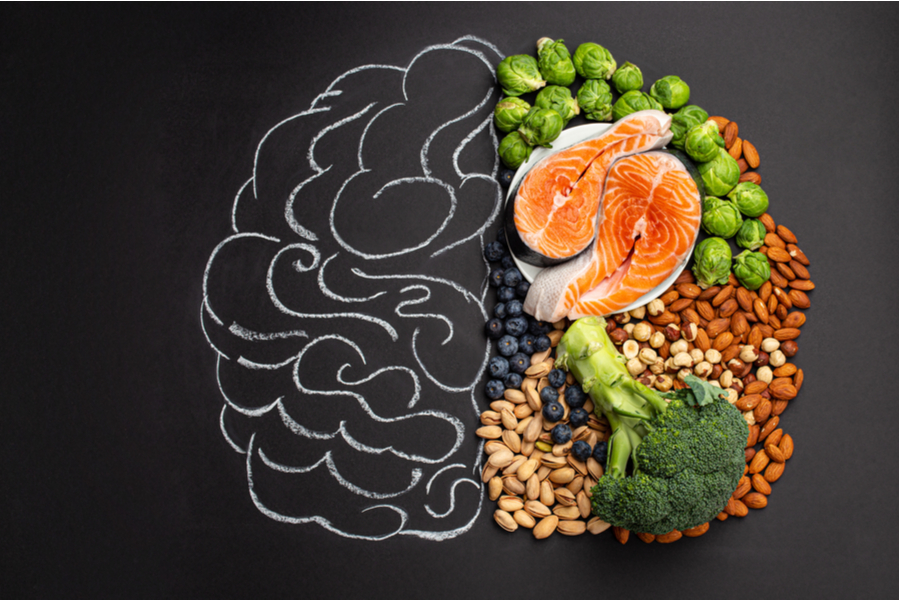
We often view nutrition in terms of how it’s nourishing our bodies, but rarely in terms of how it’s nourishing our brains. Here are five foods to build into your dietary habits for optimal brain health.
Mackerel
A great source of omega-3 fats – particularly DHA, the dominant omega-3 fatty acid in the brain. DHA makes up the vast majority of omega-3 content in brain tissue and is essential for cell signalling and maintaining the structure of brain cell membranes. Mackerel is also a source of B12 and selenium, nutrients that support nervous system function.

Nuts
An important source of vitamin E, magnesium, zinc and selenium. Vitamin E has been associated in studies with a reduced risk of age-related cognitive decline. Magnesium, zinc and selenium are essential trace elements, and low levels have been linked to symptoms such as low mood, poor concentration and sleep disruption.
Eggs
A source of vitamin B12, vitamin D and choline. Low B12 levels can lead to fatigue, weakness and mood changes. Vitamin D deficiency is common in winter months and has also been associated with low mood. Choline supports the production of acetylcholine, a neurotransmitter involved in memory and learning.
Berries (especially blueberries)
Rich in anthocyanins – plant compounds with antioxidant and anti-inflammatory properties. Some studies suggest diets high in berries are associated with better memory performance and may help protect the brain from age-related decline.
Broccoli
A source of folate (folic acid) and other plant compounds. Folate plays an essential role in DNA production and the synthesis of neurotransmitters, and low folate levels have been associated with depressive symptoms.
6. Let go of your perfectionist tendencies
We’ve all got ’em. Whether it’s obsessive tidying or triple- and quadruple-checking emails before you press send, perfectionism is a thing – and when it becomes rigid or self-critical, it can chip away at your confidence and wellbeing.
Let it go with these habit-forming behaviours:
-
Try to change your mindset to reflect realistic expectations – that you are more than good enough to be a part of.
-
Think about the standard you are holding yourself to, and whether you’d apply that to anyone else.
-
Make decisions for yourself, to prove that you can trust you. There’s really no need to always get everyone else’s opinion.
-
Stop fixating on where you need to be by taking a minute to appreciate where you are now, and how far you’ve come.
7. Communicate better
Unless your dad is the Dalai Lama, you might not have been taught how to communicate. Our bad comms habits are picked up from all kinds of places.
Make a promise to yourself to get better, with these ways to retrain your brain:
-
Clearly state what you want in the future, instead of focusing on things that went wrong previously (which can keep you stuck there).
-
Deliver criticism in between positive feedback. When done genuinely, this can soften the blow and reinforce psychological safety.
-
Resist getting all Judge Judy on your significant other, which may cause them to feel shame and withdraw. Instead, focus on how you can work together to solve the problem and move forward.
8. Learn to learn
Learning well is underrated. As a society, we’re always consuming – but how much are we remembering?
Your brain needs practice to retain information. Otherwise, instead of a sponge, you’ve essentially got a colander.
Try this new learning habit to become the pub quiz champion of the decade:
Repeat what you’re trying to learn out loud, even if you don’t think you know enough to do it right. Each time you delve into your memory vault to retrieve information – even if you make mistakes – you strengthen the memory trace. Psychologists call this retrieval practice, and it’s one of the most robust findings in learning science. Reading or listening encodes information, but trying to remember it makes it far easier to retrieve later.
9. Get a move on
One of the simplest brain upgrades? Walk more.
And yes, there’s solid science behind it.
Regular, up-tempo walking is associated with increased production of brain-supporting molecules such as BDNF (brain-derived neurotrophic factor), which supports the growth and resilience of brain cells. Walking also supports hippocampal health – the part of the brain involved in memory and spatial navigation — helping us build richer cognitive maps of the world around us.
Even moderate daily walking has been linked to improved mood, sharper thinking and greater resilience to stress over time.
Plus, walking everywhere gives you the chance to learn while you move. Audiobooks, podcasts or talks all nourish those neurons.

10. Build your tribe
A tribe could be your brain’s secret weapon.
Strong social connection is one of the most consistent predictors of long-term mental and cognitive health. A tribe consists of a group of people at similar stages in their journey, meeting every month for a few hours. You can go the whole hog and get psychologist-led group training, but the process is simple enough.
You discuss personal, business and family experiences – both good and bad – from the last 30 days and share what’s coming in the next 30. Then, two problems per session are chosen to explore using a coaching model, and members can only share from experience (never advice).
It’s a financial and time commitment in self-development – but for many, it’s transformational.