





5 lessons from a Buddhist monk on how to live well
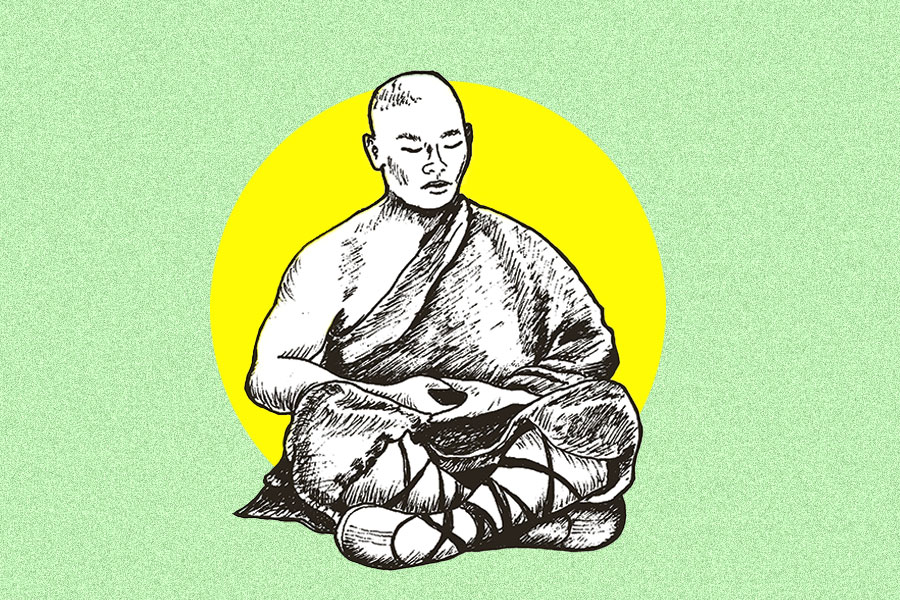
There’s never been more advice on how to live better – optimise your routine, improve your focus, upgrade your habits. The self-improvement industry is built on the idea that, with enough effort, you can engineer a more productive, more resilient version of yourself.
And yet, burnout is rising. Attention spans are shrinking. Even downtime is filled – scrolling, streaming, refreshing. According to recent data from Ofcom, adults in the UK now spend an average of more than four hours a day on their smartphones. For many, the problem isn’t a lack of tools. It’s the sense that there’s no off switch.
Buddhist teaching approaches the problem from a different angle.
Ajahn Amaro – known formally as Ven. Amaro Bhikkhu – is abbot of Amaravati Buddhist Monastery in Hertfordshire and a senior figure in the Thai Forest tradition. His teaching doesn’t promise optimisation. It focuses instead on attention: how we relate to our thoughts, our reactions, and the pace of everyday life.
The principles are simple. Applying them is less so.
Seek proof
The Buddha’s instruction was clear: don’t believe something just because you’ve been told it’s true.
That’s easy to agree with in theory. In practice, most of us do the opposite. We absorb advice constantly – from podcasts, social media, books – and mistake familiarity for understanding. Something sounds right, so we assume it must be.
The gap shows up in behaviour. Knowing what might help isn’t the same as doing it consistently enough to see whether it actually does.
Taking this principle seriously means being more selective. Not dismissing ideas, but testing them. If a habit, a mindset or a routine is supposed to improve your life, it should be visible in how you feel and function – not just how it sounds when you explain it to someone else.
It’s a quieter approach, but a more reliable one.
Count your blessings
Gratitude is often packaged as a quick fix – write a list, shift your mindset, feel better.
In reality, it’s less about adding something and more about stopping something else.
Most frustration builds in small increments. A delayed train, an unread message, a plan that falls through. On their own, they’re minor. But the mind has a habit of layering them, turning irritation into a running commentary.
Interrupting that process is where the work is.
Not every inconvenience needs expanding into a story about how your day is going, or what it says about everything else. Letting something pass without adding to it is a form of restraint – and one that becomes more valuable the more reactive your environment is.
Especially now, when comparison is constant and dissatisfaction is easy to access, noticing what isn’t wrong is a useful counterbalance.
Be mindful
A large part of modern life happens in the head.
You think about what’s next, replay what’s already happened, anticipate conversations before they occur. The volume of internal commentary is high, and most of it goes unchecked.
The assumption underneath it is that thoughts are informative – that they’re worth following.
Often, they’re not.
They reflect mood, bias, habit. They repeat themselves. They escalate quickly. And once you’re inside them, it’s difficult to step back.
Mindfulness changes the vantage point. Instead of being carried along by whatever shows up, you start to see it as it forms – a reaction, not a directive.
This is why mindfulness-based approaches are now used clinically, particularly in managing anxiety and recurrent depression. The shift isn’t about controlling thoughts. It’s about recognising them early enough that they don’t dictate the next move.
That distinction matters.
Keep it simple
Complexity has become a default setting.
Work expands, schedules fill, and there’s an underlying assumption that if something feels busy, it must be worthwhile. Even rest has become structured – tracked, optimised, improved.
The result is a kind of background noise. Not dramatic, but constant.
Simplifying things isn’t about stripping life back to the basics. It’s about reducing unnecessary friction – the extra commitments, the habitual yeses, the small accumulations that make everything feel heavier than it needs to be.
There’s a practical side to this. Fewer moving parts mean fewer decisions, less mental load, more room to focus.
But there’s also something less tangible. When there’s less competing for your attention, it becomes easier to see what actually matters – and what doesn’t.
Discover empathy
It’s difficult to stay open to other people’s experiences without becoming overwhelmed by them.
There’s more to absorb than ever – news cycles that don’t stop, social feeds that surface everything at once, a steady stream of other people’s problems, opinions and reactions. Over time, it can lead to a kind of fatigue. You either disengage completely or try to carry too much.
Neither is sustainable.
A more balanced approach sits somewhere in between. You remain aware, responsive, but not overextended. You recognise that caring doesn’t require absorbing everything.
That boundary isn’t a lack of empathy. It’s what allows it to continue.
In practical terms, it means being selective with attention. Not every issue requires your full emotional investment. Not every situation needs to be internalised.
Steady concern – rather than reactive intensity – tends to last longer.
Where this leaves you
There’s no system here, and no promise attached.
The ideas are straightforward: pay closer attention, react less quickly, carry less than you think you need to.
What makes them difficult is also what makes them useful. They don’t rely on changing your circumstances, only how you meet them.
And in a culture that rewards speed, reaction and constant input, that’s often the harder skill to practise.